
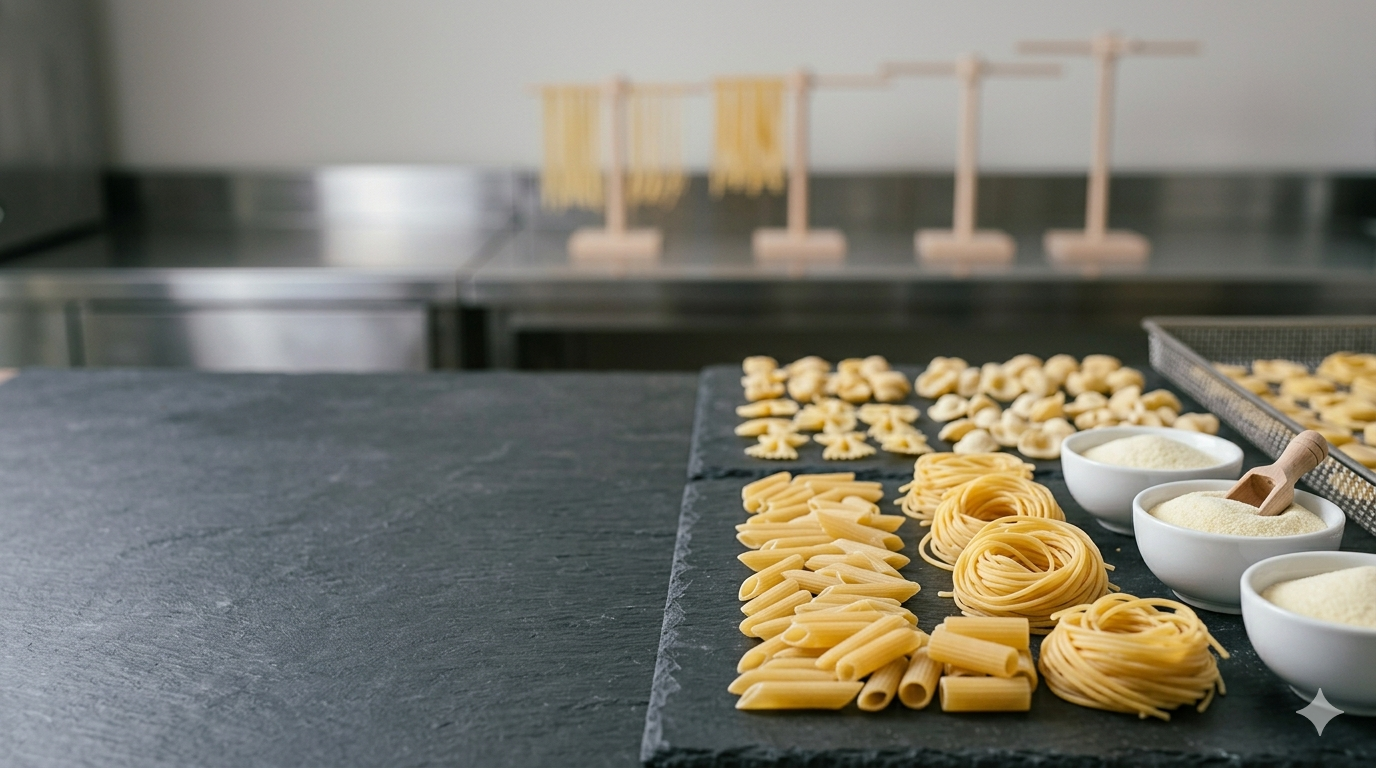
Private label pasta is one of the most competitive and scalable categories in retail. But success depends on more than choosing a factory — it requires precise alignment between raw materials, production quality, and market expectations.
What defines premium pasta?
- 100% durum wheat semolina
- High protein content
- Controlled drying process
- Good cooking resistance (al dente)
Premium pasta maintains its structure during cooking and delivers consistent texture across batches — critical for retail and food service applications.
>Production process matters
Not all pasta factories operate the same way. One of the key differentiators is how pasta is dried.
- Low-temperature drying: better flavor and texture
- High-temperature drying: faster, cheaper, but lower quality
>Packaging & shelf positioning
Packaging is not only visual — it directly affects shelf performance.
- Transparent window packaging vs full print
- 500g standard retail size
- Stackability for logistics
>Labeling requirements for Israel
All imported food products must comply with Israeli labeling requirements:
- Hebrew product label
- Ingredients list
- Allergens declaration (gluten)
- Nutrition table
- Importer details
>What to request from suppliers
- Product specs (protein %, semolina source)
- Production process description
- Packaging options
- MOQ and export capacity
- Private label capabilities
>Common sourcing mistakes
- Focusing only on price
- Ignoring protein levels
- Assuming all EU pasta = premium
- Not checking consistency between batchesConclusion
Private-label pasta can be a strong category in Israel when sourced correctly. Focus on raw material quality, process control, and supplier reliability to build a long-term advantage.
>Related sourcing guides
When building private label food categories, pasta is only one example. Other categories, such as tomato paste in retail cup formats, require similar supplier validation and packaging considerations.
Topics covered

