
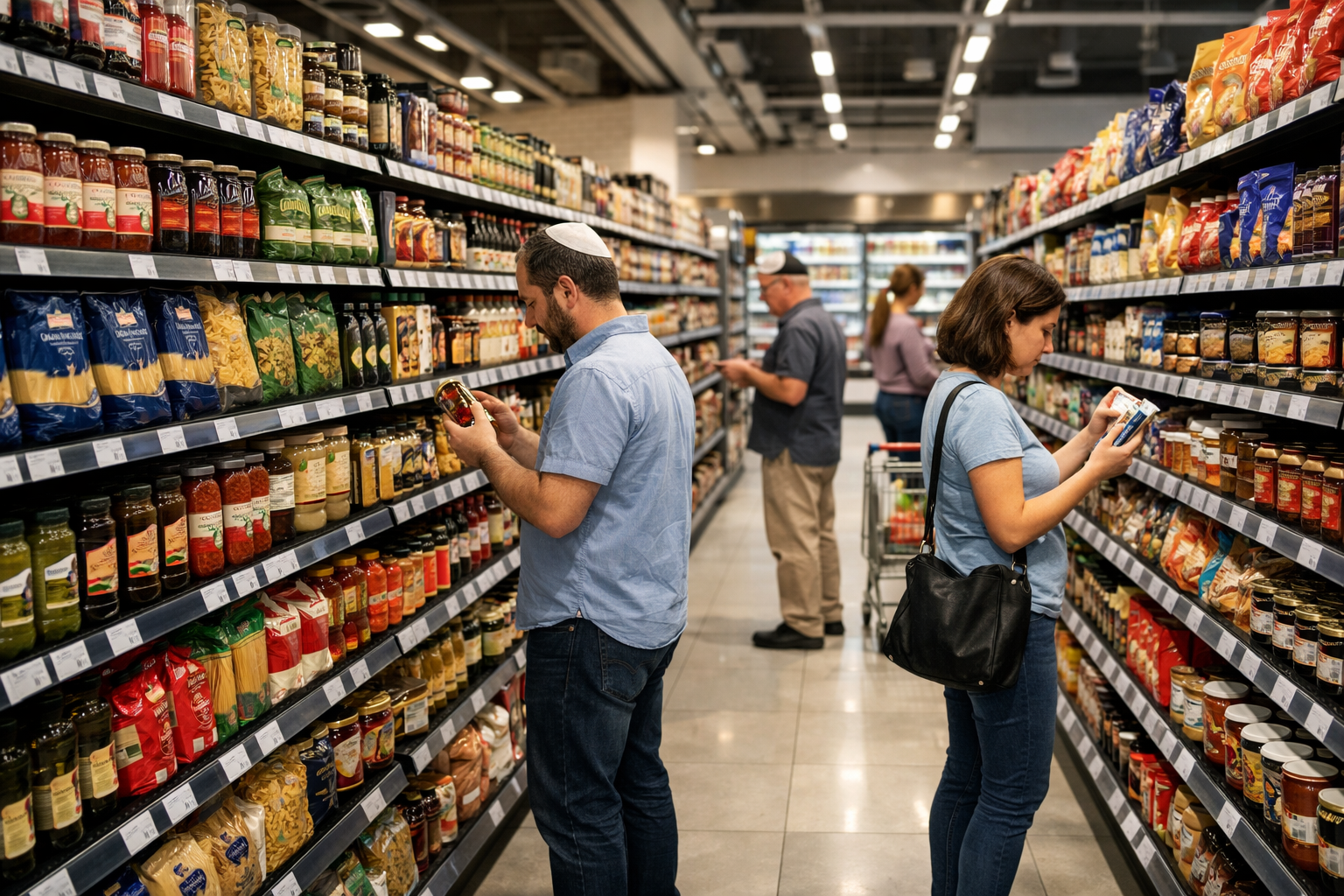
Entering Israeli Retail in 2026: Opportunity with Precision
Israel continues to be one of the most attractive retail markets in the region for food exporters. Strong consumer demand, premiumization trends, and openness to imported products create real opportunities across categories.
But unlike many markets, success in Israel is not only about product quality —
It is about execution, compliance, and alignment with retail expectations.
One missing detail can delay shipments, block listings, or damage partner trust.
📦 Retail Reality: What Israeli Supermarkets Expect
Major chains like Shufersal, Rami Levy, Tiv Ta’am, and Victory operate with increasing professionalism and category discipline.
They expect suppliers and importers to deliver:
- Full compliance from day one
- Consistent supply capability
- Clear product positioning (premium vs value)
- Packaging ready for shelf performance
➡️ In simple terms:
You are not just exporting a product —
You are entering a structured retail system
💡 Key Insight: Compliance is Not a Step — It’s the Entry Ticket
Many exporters treat regulatory requirements as a final stage.
In Israel, compliance must be built into the process from the beginning.
👉 The fastest deals happen when:
- Documentation is ready
- Labeling is correct
- Kosher expectations are clear
- Importer alignment is tight
🏷️ Mandatory Labeling Requirements (Retail Products)
Every food product sold in Israeli supermarkets must comply with strict labeling rules.
Core requirements:
- Hebrew label (mandatory — no exceptions)
- Full ingredient list
- Allergen declaration (clear and visible)
- Nutritional values table
- Net weight
- Importer name and contact details
Additional requirements:
- Storage conditions (when relevant)
- Expiry / best-before date format
- Country of origin
⚠️ Most common issue: incorrect or partially translated labels
➡️ Even small mistakes can delay customs clearance
✅ Kosher Certification: Often a Market Gatekeeper
While not legally required for all products, kosher certification is commercially critical.
In practice:
- Large supermarket chains strongly prefer kosher-certified products
- Many buyers will not list non-kosher items
- Different levels exist (basic vs Mehadrin), depending on target audience
👉 Key rule:
Define kosher requirements early — not after production
📦 Packaging: Built for Shelf, Not Just Transport
Israeli supermarkets are highly competitive environments.
Packaging must balance:
- Shelf visibility
- Brand clarity
- Functional logistics
What works in Israel:
- Clean, premium design (especially for higher segments)
- Clear product identity (not confusing or overloaded)
- Standard retail sizes aligned to category norms
What fails:
- Overly generic export packaging
- Poor translation / unclear labeling
- Weak shelf differentiation
✅ Think like a retailer, not a producer
🚛 Import Process & Documentation
To clear Israeli customs efficiently, importers and suppliers must align on documentation.
Typical requirements:
- Commercial invoice
- Packing list
- Certificate of origin
- Health certificate (for relevant categories)
- Product specifications
Additional layers may apply depending on category (dairy, meat, sensitive foods).
⚠️ Delays usually happen due to:
- Missing documents
- Inconsistencies between documents and labels
- Incorrect product classification
🤝 Working with an Israeli Importer
In most cases, foreign suppliers cannot access retailers directly —
The importer is your key market partner.
A strong importer will:
- Handle regulatory compliance
- Manage logistics and customs
- Position your product correctly
- Build relationships with retail buyers
💡 Operator mindset
The best importer is not the biggest —
It’s the one who understands your category and knows how to win shelf space
🚫 Common Mistakes Exporters Make
- Treating Israel like a “simple” export market
- Ignoring Hebrew labeling until the last stage
- Underestimating kosher expectations
- Choosing the wrong importer (generalist vs category expert)
- Misaligning pricing with retail positioning
👉 These mistakes don’t always kill deals immediately —
They usually slow them down or weaken long-term success
🛒 Retail Strategy Matters More Than Entry
Getting listed is only step one.
To succeed in Israeli supermarkets, exporters must support:
- Clear category positioning
- Consistent supply
- Marketing and activation (sampling, promos)
- Product education (especially for premium categories)
➡️ The winners are not just compliant —
They are commercially aligned with the shelf
🚀 Conclusion: Precision Creates Speed
Israel is not a “hard” market —
It is a precise market
Exporters who:
- Build compliance early
- Align with the right importer
- Adapt packaging and positioning
- Understand retail dynamics
…can move fast and build a strong, long-term presence
🎯 Want to Enter Israeli Supermarkets in 2026?
FoodXchange helps food manufacturers:
- Navigate compliance and labeling
- Match with verified Israeli importers
- Build retail-ready product strategies
✅ Faster market entry
✅ Stronger positioning
✅ Reduced trial-and-error
Let’s prepare your product for the Israeli shelf — the right way

